April 4th, 2009 by Hal Moses
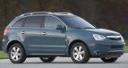 If you’re thinking of purchasing a small SUV you’re in luck because there are many good choices. Compact SUVs offer practicality, fuel-efficiency, and nice style. In fact you can find many models for under $25,000 complete with an auto warranty. So what are the best and worst models to consider? Read on.
The Honda CR-V is the #1 compact SUV. It scored the highest for performance, safety, and interior. According to reviewers, it drives really well, has a sleek design and offers ample storage room. Following close behind, the Toyota RAV4 comes in second place in its class. This vehicle has a surprising amount of power for its size. It now offers a V-6 engine, as well as a third row seat. The RAV4 was the first compact SUV in its class over a decade ago. Coming in #3 is the 2008 Subaru Forester. This SUV is known for being a fun, family-friendly vehicle. Reviewers complained about the exterior being bland and the balky transmission, but were willing to overlook these things because it had some great positive features.
Unfortunately, there are some compact SUVs that didn’t rank as well. In last place was the Saturn Vue Hybrid. According to reviewers, it isn’t very refined and isn’t as fuel thrifty as many other hybrids. Also at the bottom of the list is the Mazda Tribute because its power and handling doesn’t match its competitors. Finally, the Jeep Compass drives more like a car, but doesn’t have the sportiness or off-road capabilities that other Jeeps have.
If you’re looking to buy a compact SUV, there are many great choices out there. The most important thing is to do your homework and make sure you are choosing wisely. Also keep in mind the cost of new car warranties, maintenance costs and auto loans when determining your budget.
April 4th, 2009 by Hal Moses
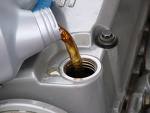
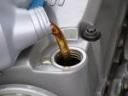 Many motorists aren’t sure whether they should use regular or synthetic oil in their cars. The answer depends on the age of the vehicle, mileage, and the recommendations by the carmaker.
Vehicles with high mileage that are older often have excessive engine wear that allows oil to leak internally. Synthetic oil isn’t recommended on these vehicles because it is thinner than regular oil and flows freely. Using it often will cause internal oil combustion.
Many carmakers today use synthetic oil in their engines. This is often the case when the car has an engine that is high performance with high compression, high temperatures for operating, and engine tolerances that are tight. If you’re thinking of switching to synthetic oil and your car still has an auto warranty, make sure to consult your dealer first.
In the proper vehicle synthetic oil is a good idea (consult your owner’s manual). Although synthetic will cost you twice as much as regular, it is worth it because it lasts longer and can help your engine last longer.
April 3rd, 2009 by Hal Moses
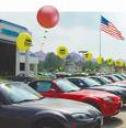 The decision to lease or buy can be a difficult one. Motorists should consider more than just their budget. Typically, leasing tends to be cheaper, but it also leaves drivers with no equity after the contract is up. There are some important factors to keep in mind when making this important decision.
First, it is necessary to look at the cost. Consider four factors when you’re thinking of leasing. These are the leases length, the payments monthly, the mileage restrictions, and the down payment. If you exceed the restrictions on the mileage you could ring up big fines. Also, if you hold onto a lease for more than three years you will often have to replace tires and pay for other maintenance.
Next, look at your budget. Leases are almost always cheaper for short-term because there isn’t a down payment and the monthly costs are low. However, leases end up being more expensive than buying a vehicle that you are going to keep for a decade. This is assuming that you purchase an auto warranty with your car so that you don’t end up paying unnecessary expenses. But if drivers prefer to have a new car every three years, leasing is the way to go.
Also consider your life plans. If you are going through life changes, such as moving far away, or starting a family, you are going to benefit from leasing. This will provide you with the flexibility that you need.
Consider these factors and make a decision to buy or lease based on your needs. Just remember, if you buy, you want to be covered with an auto warranty to save you money in the long run.
April 3rd, 2009 by Hal Moses
 Often motorist get sticker shock or experience buyer’s remorse after buying a new car. However, you can avoid this by considering the expenses that you will encounter in the future.
According to experts, most consumers anticipate the price of the purchase, registration and taxes. However, many people forget to factor in the price of insurance and new car warranties. Fortunately, by doing your homework you can get good deals on insurance and an auto warranty.
To control car costs drivers should consider these tips. First of all, decide before you get to the dealership the amount of money that you can spend. Also, decide on what type of car will suit your needs. It is also beneficial to get quotes from several dealers, because then you are in the position to negotiate. Finally, check insurance and auto warranty prices on the vehicle that you want to purchase.
You don’t have to go broke purchasing a new car. But, be smart and consider all of the costs involved. It isn’t just the purchase price that you will be paying.
April 3rd, 2009 by Hal Moses
 While the electric Chevy Volt is dependent on GM’s uncertain future and a very high price tag, Nissan is enthusiastic about the future of its electric car that is yet to be named. This car has plans to be sold to fleets in the year 2010 and retail consumers in the year 2012. It has recently been on a 12-city tour, with an electric drivetrain being carried by a Cube mule.
According to Nissan, the driving range on the car will be around 100 miles, while it will take about four hours to recharge plugged into an outlet that is 220-volt and eight hours using a 110-volt outlet. The size of the vehicle will roughly be about the same as the Cube, however it will have distinct styling. A reporter for The New York Times was told by an executive that the vehicle would have “an iconic electric-vehicle look,†however it won’t bring to mind ‘Blade Runner’ or the ‘Jetsons’.
And perhaps the most important thing is that Nissan is going to try to keep the cost of the vehicle between $20,000 and $30,000. The car will bring a $7,500 tax credit, which will likely bring down the cost of the vehicle to under $20,000, and with the savings on fuel, this electric car will be intriguing to the cheap and the green. This will leave consumers some extra cash to invest in other car expenses, such as an auto warranty. After all, new car warranties will allow motorists to drive this new technology with peace of mind.
April 2nd, 2009 by Hal Moses
 Here is some information that parents hate to hear: the Insurance Institute for Highway Safety tested booster seats for safety and found that 13 models out of the 41 that were tested rated so poorly in the area of seat belt fit that they aren’t recommended by the IIHS. Parents try to do everything possible to keep their kids safe, such as maintaining their cars with the addition of an auto warranty and buying safety seats, so this news is unfortunate.
According to Adrian Lund, the IIHS president, the 13 seats not recommended don’t provide kids with the full benefit of an improved lap belt fit. She claims that these boosters may make children more comfortable, but they don’t allow seat belts to be positioned in such a way that provides optimal protection.
The IIHS puts out a reminder to parents that booster seats aren’t intended to provide extra crash protection; instead they allow for a better fit and make the seat belt more effective. Seat belts were designed with adults in mind and until a child is 4 feet 9 inches tall, they won’t fit correctly. An efficient booster seat reroutes the seat belt across the bony parts of a child’s body and away from the abdomen, which is a vulnerable injury area. However, the IIHS did say children are better off riding in any booster seat, rather than unbuckled.
Here are the tested seats that aren’t recommended:
• Cosco/Dorel (Eddie Bauer) Summit
• Graco CarGo Zephyr
• Compass B505
• Compass B510
• Evenflo Generations
• Dorel/Safety 1st (Eddie Bauer) Prospect
• Cosco/Dorel Traveler
• Cosco Highback Booster
• Cosco/Dorel Alpha Omega
• Evenflo Chase Comfort Touch
• Safety 1st/Dorel Intera
• Safety Angel Ride Ryte backless
• Evenflo Big Kid Confidence
April 2nd, 2009 by Hal Moses
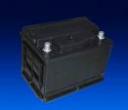 People need to realize that in today’s cars the main source of power is still the battery. The battery is not just used to start the engine; it is also used to supply electrical energy that maintains the memory of the numerous computers onboard. Batteries and cable connections that are poorly maintained fail to supply the voltage needed for innovative electronic devises. This can cause a vehicle to perform erratically. Maintaining your battery and purchasing an auto warranty can save you from breakdowns. Here are a few simple do’s and don’ts that can help you maintain your car battery.
First, it is important to check cables to make sure they are tight and free of corrosion. Make sure that terminals are lubricated with petroleum jelly to keep cables clean longer. Also, the battery should be secured firmly to the mounting bracket. If it’s not, it can result in short circuits. Finally, make sure to maintain fluids. If fluid is low, distilled water should be added. If there isn’t fluid the battery needs to be replaced.
There are some important things that you shouldn’t do concerning your battery. Don’t charge your battery if it’s frozen because there is a possibility it could explode. Instead, you must replace the battery. Never charge a battery that is dead with an alternator. The alternator may be damaged in this case. Also, you shouldn’t disconnect battery cables if your car is running.
Make sure to maintain your battery so it can perform at its peak. These simple tips can help your battery last longer. Of course, you never know when your car will fail, so make sure to purchase an auto warranty that will protect you in the event of a breakdown.
March 31st, 2009 by Hal Moses
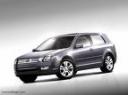 BMW, Ford and VW announced the plan to boost sales of small cars that are fuel-efficient after the slump of consumer spending, which shows that improving gas powered cars will come before vehicles with alternative fuel.
Automakers in the U.S. are cutting emissions by steering away from SUVs and trucks and focusing on smaller cars, as major advances in other technology are being delayed because of the global financial crisis. Just like European automakers, they are making the most of the combustion engine, for example improving turbochargers, to increase efficiency while continuing to burn fossil fuels.
Vehicle sales in the U.S. plummeted 27% last month, extending the slide in the industry to 11 months in a row, which is the longest in 17 years. Tightening credit has discouraged buyers, as the U.S. and Europe shovel out money to help bail the banks out. Meanwhile, the roads won’t be full of electric vehicles until huge investments have government support.
Carmakers are finding themselves in a position where they have to pay attention to the basics, selling gas-powered cars. In the meantime, many motorists are hanging on to their current vehicles and purchasing an auto warranty to protect them from unnecessary repair costs.
March 28th, 2009 by Hal Moses
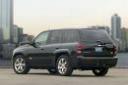 Most people believe that SUVs are the safest vehicles on the road; however, recent test results show that midsize SUVs may not offer the best safety. In fact, the Insurance Institute for Highway Safety says that a lot of cars produced better results in crash tests than six midsize SUVs.
The SUVs tested were the Chevrolet Trailblazer, Nissan Pathfinder, Nissan Xterra, Ford Explorer, Jeep Grand Cherokee and Toyota 4Runner. These vehicles were tested in a front collision at 40mph and a side impact.
All of these vehicles showed improvement since the last IIHS test. In the instance of the front collision, five out of the six vehicles were rated Good. The Trailblazer was rated Acceptable.
However, the results of the side-impact tests weren’t as good. The Trailblazer and Grand Cherokee didn’t protect the torso because they are only equipped with standard side airbags to protect the head. The Pathfinder, 4Runner, and Xterra had better performance with side impact because they include side airbags that protect the torso as well as the head. However, cars had better ratings on side impact.
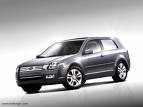
If you’re looking to purchase a midsize SUV, purchase one with high crash ratings. For instance, the Ford TaurusX and Edge, Hyundai Santa Fe, Honda Pilot, and Subaru Tribeca are the highest rated midsize SUVs. Although these SUVs are durable, it’s necessary to purchase an auto warranty to protect yourself from repair costs down the road. After all, no vehicle is full proof.
March 28th, 2009 by Hal Moses
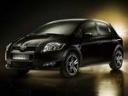 Consumers have been more concerned than ever about saving money on their vehicles. They are doing everything from purchasing small, fuel-efficient cars, to purchasing an auto warranty to ensure they don’t pay unnecessary repair expenses. But are they willing to skip the amenities that come in new cars, such as air conditioning, an automatic transmission, and power locks and windows, to save money? And are stripped cars even available?
The truth is that it can be hard to find a car stripped with crank windows and a manual transmission.
According to JATO Dynamics, 89% of vehicles sold in America last year came standard with automatic transmissions, which is up from 85% in 2003. Also, power locks came standard on 87% of cars sold, compared to 80% in 2003.
The vehicles that offer these features as optional tend to be on small cars, yet economy-car buyers usually pick convenience and comfort over cost if given a choice.
For example, the cheapest model by Toyota is the Yaris, which begins at $11,550 for a 2008 base model hatchback with air-conditioning. However, approximately 80% of Yaris buyers choose to pay an extra $900 for an automatic, and about 60% opt for a power windows and locks package, which costs an extra $1,680.
It appears that features, such as air conditioning, and automatic transmissions are necessities that most people aren’t willing to live without, just like new car warranties.


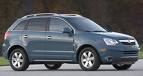 If you’re thinking of purchasing a small SUV you’re in luck because there are many good choices. Compact SUVs offer practicality, fuel-efficiency, and nice style. In fact you can find many models for under $25,000 complete with an auto warranty. So what are the best and worst models to consider? Read on.