January 17th, 2009 by Hal Moses
 Terms like geometric morphometrics and pareidolia aren’t generally important to people designing or buying cars, however they were significant in a recent study that found that people see faces when looking at vehicles, and typically they prefer ones that look powerful.
Pareidolia is an occurrence in which people actually see faces in various things from clouds to inkblots to cars. A recent study was based on this concept and used geometric morphometrics to let participants rank vehicles on how they looked, using traits that are human like disgusted, sad or extroverted.
The results of the study confirmed that pretty much all people like cars that are powerful looking, like the BMW 5 Series. Also, people tend to shy away from designs that are feeble-looking, like the Toyota Prius because they worry that they won’t be as sturdy and will require a good auto warranty.
Who knows if this research will determine the future designs of cars, but it might mean that we will see more big-mouthed grilles on the roads.
January 17th, 2009 by Hal Moses
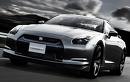
 Over the last week there has been a story circulating on the Internet about the owner of a 2009 Nissan GT-R who couldn’t get his auto warranty to cover his blown transmission. What was the problem? He claims he turned off the stability control in order to use the vehicle’s launch control feature. Making that mistake cost him about $20,000 in auto repairs.
Nissan is well aware of the story on the Internet, and it says that utilizing the launch control feature or turning the VDC off by himself wouldn’t void the auto warranty. However, Nissan claims that when the two features are abused and lead to damage, the auto warranty becomes void. The auto warranty includes normal stipulations about racing, modifications, as well as other changes that void new car warranties.
Nissan couldn’t calculate how car owners could use the vehicle, meaning how often it could be driven on a track or other difficult uses. Other GT-R drivers have complained about the car’s transmission, but most of them attacked the author of the original story for not being a good driver.
The result of this story is clear for owners of GT-R owners: You shouldn’t drive your GT-R too hard if you don’t want to be the one to pay for it.
January 17th, 2009 by Hal Moses
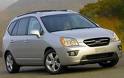
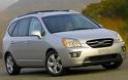 A recall has been issued by Kia for 6,680 of the Rondo EX and LX minivans from the model years 2008 and 2009. According to the National Highway Traffic Safety Administration, there may be a defective fuel pump for the four-cylinder 2.4-liter engine, which may not be able to get enough fuel effectively to the engine.
This could result in engine hesitation or failure of the engine starting correctly, which might endanger motorists if the problem gets progressively worse. If the problem occurs, the check engine light coming on may alert drivers.
If you have a 2008 or 2009 Kia Rondo, Kia will replace your fuel pump free of charge. Vehicle owners can also call Kia at 1-800-333-4542. Taking care of the problem right away may save you trouble in the future.
Unfortunately, you never know when your car will fail, which is why an auto warranty is a must. However, listening for recall alerts can also save you from unnecessary car problems.
January 16th, 2009 by Hal Moses
 If you’re considering purchasing a new or used vehicle, you should do a few things first. You can make the process of buying a car easier, and save yourself some money by following a few simple tips.
First of all, you should consider purchasing a pre-owned car. New vehicles will immediately lose about 30% of their value when they are driven out of the dealership lot. A used car will save you from losing that immediate depreciation.
Try to purchase a vehicle that is fuel-efficient. There are an endless amount of new hybrid options and cars that will save you money at the gas pump. With the variety of choices out there, there is no need to purchase a vehicle that guzzles gas.
If at all possible, save for a decent down payment. A lot of motorists will barely put any money down on a vehicle and don’t understand why their payments the first four years are so high. Putting down 20% will make a big difference in lowering monthly payments.
Lastly, buy an auto warranty along with your car purchase. Many consumers try to get away with not doing this and they end up spending an unnecessary amount of money on repairs down the road.
Follow these simple tips to save yourself a headache. Do your homework before getting to the dealership in order to make the best decisions.
January 16th, 2009 by Hal Moses
 Consumers can expect the 2009 Porsche Cayman and Boxster to arrive at dealerships this March, complete with an auto warranty and improvements in technology, fuel economy, and power. Of course, this means there will be a slight bump in price. According to Tony Fouladour, who works for Porsche, the 2009 Cayman is going to start at $50,300 including new car warranties, and the Cayman S is going to cost $60,200, which doesn’t include a destination charge of $975.
The base price for the 2009 Boxster will be starting at $46,600 and make a jump to $56,700 for the Boxster S. There will be a $950 destination charge for the Boxster.
Overall, the pricing for 2009 Porsche’s ends up being about a 1.8% jump in comparison to the 2008 models, however this increase is representative of more bang for your buck. Both the 2009 Cayman and Boxster will feature the new Direct Fuel Injection technology by Porsche, which will give added power, while estimates for gas mileage top 25 mpg-a fuel economy increase since 2008.
January 16th, 2009 by Hal Moses
 There is nothing worse than getting your car repaired and hearing, “It isn’t covered under your auto warranty.â€Â Often, motorists are confused because they assume that certain repairs are covered. Drivers need a little education to understand more about their new car warranties.
People need to understand that an auto warranty isn’t an entitlement, but an agreement you make with the car manufacturer. Your responsibility is to fulfill specific maintenance requirements that the manufacturer sets. After doing your part, the manufacturer must perform repairs resulting from a defect or a failed part.
So, what parts are covered? The auto manufacturer must cover the parts that it makes. For example, transmissions, engines, steering, suspension, computers, instruments, chassis wiring, and other parts that they manufacture are covered. Maintenance items and wearable items aren’t covered under new car warranties. For example, filters, hoses, belts, brakes and tires aren’t covered.
What about the parts not made by the manufacturer of the car? Items such as stereo systems and conversion components have a warranty through their manufacturers. These can be found in paper work you received with the purchase of the car.
The best thing that you can do to avoid misunderstandings about new car warranties is to educate yourself. Make sure that you do your homework and read all of the fine print in your auto warranty.
January 16th, 2009 by Hal Moses
 When buying a car for a teen driver it is important to consider safety and reliability. After all, teens don’t have a lot of experience. When car shopping for a young driver, cars should be considered that have good crash-test results and advanced safety features.
For the most part big, heavy vehicles perform the best in crash tests. However, large cars can be hard to handle and often have lousy fuel economy. SUVs and large pickup trucks aren’t recommended for teens because they are more prone to roll over in an accident than other cars.
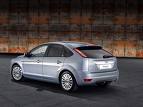
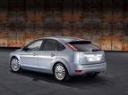
The best bet for teens is a mid-size sedan with good safety and crash ratings. Some cars that have these features are the Honda Civic, Toyota Corolla, Hyundai Sonata, Ford Focus, Mazda 3, Acura RSX and Subaru Impreza.
The best thing to do when buying a car for a teenager is to get the newest model possible that is reliable. Consult the Insurance Institute for Highway Safety to see crash results for cars that you are considering. And make sure to protect your wallet by purchasing an auto warranty. After all, teenagers tend to be a little bit hard on their cars.
January 14th, 2009 by Hal Moses
 People are often irrational about their vehicles. Some drivers even talk to their vehicles and give them a pat here and there. But as much as our cars mean to us, we don’t need to waste money on them. Here are some common ways that you can avoid unnecessary car expenses.
First of all, buying premium fuel over regular isn’t necessary. Purchase the cheapest gas possible that keeps your engine from knocking. Octane serves the purpose of preventing knock, so if your car doesn’t knock with regular gasoline you’re fine.
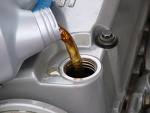
Usually, carmakers recommend that you change your oil every 5,000-7,000 miles. Many motorists assume that they should get their oil changed every 3,000 miles, however, this should be done only if you put a lot of wear and tear on your car.
Also, having auto repairs done at a dealership will cost you. Instead, find a reliable independent shop to do the job for less money. In addition, make sure to have an auto warranty to avoid unnecessary costs down the road.
Following these simple tips can save you lots of money. Don’t allow other people to talk you into paying unnecessary expenses for your vehicle and purchase used car warranties to protect your wallet.
January 14th, 2009 by Hal Moses
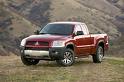
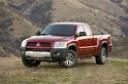 Mitsubishi announces plans to cancel production of its Raider pickup at some point during the middle of next year, ending a sales streak that has been difficult to say the least. The carmaker is reworking its lineup and changing the focus to more fuel-efficient vehicles, therefore the Raider moved right to the chopping block.
The Raider made its debut in 2005, and was Japan’s answer to the Dodge Dakota, however it was never able to catch on, and its poor sales made it the perfect target during a period of retooling. Last year, sales of Raiders was less than 3,000 vehicles.
First it was Isuzu’s exit from the Unites States, and now this announcement adds to the shrinking supply of badge-engineered pickups. However, you tell us: Do you think anyone out there is going to really miss the Raider?
Consumers are trying to protect themselves by purchasing vehicles that are more fuel-efficient, and making sure they have good new car warranties. After all, an auto warranty can save you from unnecessary repair costs down the road.
January 10th, 2009 by Hal Moses
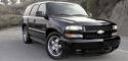 Not everyone has the option of purchasing a shiny new car, but there are many new-to-you cars that you can get for a great deal. Recently, the Kelley Blue Book put together a list of cars in average condition with a value between $15,000-$21,000. Here are three of the top cars on the list.
First, there’s the 2003 BMW 3 Series sedan. This car has an average value of $20,290 according to Kelley Blue Book. This is a performance-oriented car that handles wonderfully and has great style.
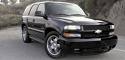
The 2004 Chevrolet Tahoe SUV has an average value of $20,335, and is a great bargain. The Tahoe is very easy and enjoyable to drive. Also, this vehicle has a roomy interior that is very comfortable.
Next, the 2006 Chrysler 300 sedan is a great used car with an average value of $17,865. This vehicle has a 3.5-liter V-6, which offers adequate power in any situation.
Of course we all wish we could purchase a brand new vehicle, but there are many used cars out there that offer consumers a great bargain. Drivers should do their homework to ensure they are getting a good vehicle, and purchase an auto warranty to go with it. After all, peace of mind goes a long way.


 Terms like geometric morphometrics and pareidolia aren’t generally important to people designing or buying cars, however they were significant in a recent study that found that people see faces when looking at vehicles, and typically they prefer ones that look powerful.