November 7th, 2008 by Hal Moses
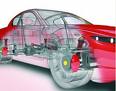
 More and more cars are being loaded with high-tech gadgets. In fact, some luxury car models have up to 80 switches and knobs to allow for advanced safety and comfort of motorists. Yet, there are more high-tech gadgets coming on the market.
Soon there will be sign recognition systems that will be able to read wrong-way signs and speed limits. This will come on the market in 2009-2010.
Cameras could replace Side view mirrors in the future. Images would be displayed on the rearview mirrors on the edges, or on the instrument panel.
We may see chatty cars in the future. Developers are trying to create a network that would monitor signals from car systems and warn other cars. For example, skidding due to slick roads could be transmitted to warn other drivers.
Bumper bags could help SUVs be less deadly when hitting a low-riding car. This has been shown to reduce intrusions and cause less injuries.
High-tech gadgets are great for motorists, but only if they learn how to use them before getting on the road. In addition, with any new technology, drivers should have an auto warranty to protect themselves from technology failure.
November 7th, 2008 by Hal Moses
 Today, GM announced a loss of billions of dollars for the third quarter, as well as many upcoming job cuts. In addition, GM claims that it will run out of money by February of next year without government help. Yet, it is still planning to produce new car models over the next two years, exactly 15 in the U.S.
Although the company has plans to cut billions of dollars of costs for the next year, it is still going to launch new products. The Chevy Volt electric plug-in hybrid is the most notable because it will actually receive an increase in spending.
What other vehicles are still slated for launch? Still on their way, but probably delayed are the Cadillac CTS Wagon and SRX crossover. Also, the Chevy Camaro, Chevy Equinox crossover and Cruze compact car.
So, where does this leave the car shopper? Not only will you have to anxiously wait for these new cars to come to showrooms, you will also have to wait to see if the company is going to survive by the time the cars are supposed to debut. So, you might want to purchase an auto warranty and maintain your current car, and not hold your breath for these new models, just in case.
November 6th, 2008 by Hal Moses
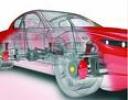 In future car accidents a circuit could be as crucial to survival as a seat belt. Congress made seat belts mandatory in the 1960’s, which was revolutionary in car safety. Since then, seat belts have greatly reduced deaths. Now, there is an additional safety revolution in the midst. The National Highway Traffic Safety Administration has employed a new standard. This makes electronic stability control equipment a mandatory component in all cars. The adoption of ESC will save approximately 10,000 lives every year.
Most luxury vehicles already come with ESC. Other models offer it as an option. This is just one of the new safety advancements designed with the purpose of preventing auto accidents, not just protecting passengers. The majority of these new features have a microchip base. Many are still being perfected. So beware, you never know when new technology will fail. However, new car warranties will save you from unnecessary expenses.
Many motorists are finding it easiest to buy a package of safety options, rather than individual gadgets. Lexus, for example, places an emphasis on how its safety features work as a system. It has a package with lane-departure warning, smart cruise control, and ESC.
Integrating such systems, and the yielding of throttle, brake, and steering raise the question: Do drivers need or want this much help? Who is actually in charge of the wheel? No matter the answer, an auto warranty is essential in protecting your vehicle with all of those fancy gadgets.
November 6th, 2008 by Hal Moses
 It may be tempting to use one of the giant retail chains that seem to be popping up everywhere for auto service, but is it smart? Well, there’s something to be said for building a relationship with your auto repair facility, and with a large chain, it probably won’t happen.
Think about it, you go to a mass retailer for a repair, and then after a year the part fails. Yet, when you go back to the original location for an auto warranty claim, the first thing they ask for is your receipt. If you don’t have the receipt you’re out of luck. Chances are they will have no recollection of you or your car from the previous year.
Many people make the mistake of looking for a service shop just on the basis of price. However, you need to consider other factors when choosing a shop. Imagine how nice it would be to build a relationship with a shop where the mechanic recognizes you and your car and you feel a loyalty. We’ve all been in an emergency situation where we need a repair done that day. If you have a relationship with your mechanic, chances are that he will be more likely to squeeze you in.
Ultimately, the choice is up to you when choosing a service shop. However, keep in mind the benefits of being able to feel loyalty from your mechanic.
November 1st, 2008 by Hal Moses
 With gas prices fluctuating daily, Americans are trying to find ways to save at the gas pump. Ford has put together some easy tips for all motorists, which suggest ways to alter their driving behavior.
First of all, motorists should slow down and keep a steady speed. Consider driving 55 mph instead of 65 mph. Just by following this simple tip you can improve your fuel economy 10-15%. Also, by maintaining a constant speed and not pumping the accelerator you can avoid sending more gas to the engine.
Next, avoid aggressive driving to keep from wasting fuel. Also, this will help you avoid wearing out brakes and tires. Try to have a smooth acceleration and soft brake.
Don’t waste money idling. Even in frigid temperatures, engines today don’t need to warm up. After starting the vehicle, drive away gently. Instead of idling in traffic and fast food drive-thrus, just turn you engine off.
Finally, purchase an auto warranty so that you aren’t afraid to have maintenance and repairs performed. Maintaining your vehicle will ensure that it is running efficiently and has the best fuel economy possible.
November 1st, 2008 by Hal Moses
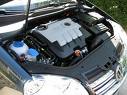
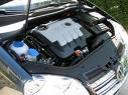 A diesel engine used to bring about a wince from people who associated diesels with engine noise, a not so pleasant smell, and blue smoke coming out of the tailpipe. However, things are changing. Diesel engines will soon elicit a positive response.
The new generation of diesels is considered clean. They use a very low sulfur diesel fuel that was made available in the United States in 2006. It is predicted by experts that diesel sales are going to increase approximately 300% within 10 years. One of the reasons for this is that diesel engines have around 20%-40% better fuel-efficiency than engines powered by gasoline.
The Clean Diesel Fuel Alliance claims that using ultra low sulfur fuel in these new and improved diesel engines will cause air quality to improve greatly. The yearly reductions in emissions will be the same as taking away the pollution from over 90% of the buses and trucks today. This is when the fleet of heavy-duty vehicles has been replaced by 2030.
It may take time to change people’s ideas about diesel engines, but people will begin to realize the benefits. Not only will they make our air cleaner, they will save people at the gas pump. However, as with any car, it is necessary to buy an auto warranty so you are covered in case of failure.
November 1st, 2008 by Hal Moses
 The 2008 Chevrolet Aveo5 didn’t have many trophies to its name; however, it was best known for being the most affordable car in America. But for 2009 there are several new contenders. Nissan just announced its new rock-bottom entry, which is now the cheapest car in America; it is the Nissan Versa 1.6 that has an MSRP of $9,990 including new car warranties. That price beats the Accent by about $1,000 and the Kia Rio, Toyota Yaris, and Chevy Aveo by around $2,000.
The Versa has a four-cylinder 107 hp, 1.6-liter. It has 15 hp fewer than the standard Versa 1.8, however it is still competitive. The newer version has a standard five-speed manual with the option for a four speed automatic for $11,990. Gas mileage is 26/34-mpg city/highway for the manual and 26/33 for the automatic version.
For the price, Nissan makes air-conditioning an option for $1,000 extra. However, it comes standard on the other models, and also on the 1.6 Versa.
Not only is the Versa the least expensive car in America, but also it exceeds its competition in passenger volume and has good power and mileage ratings, as well as an excellent auto warranty.
October 31st, 2008 by Hal Moses
 If you are thinking of purchasing a new car, don’t just rely on professional expertise; make yourself a professional expert as well. This includes taking certain measures such as doing your homework and researching an auto warranty. You can be empowered by arming yourself with the following information about purchasing a used vehicle.
Examine the pedals to check for wear. Rarely do people update the pedals, so this is a good indication of the cars true history.
Next, take a look at the steering wheel. While the engine is turned off, joggle the wheel to see how much movement there is. There shouldn’t be more than one inch of play. If there is, a new steering gearbox may be needed.
Don’t ever buy a car that has frame-damage. You can tell this by looking at the core support of the radiator. This connects to the fenders in the front of the vehicle. It shouldn’t be welded on each side, but bolted.
Lastly, check the paint job on the vehicle. Look for dents, scratches and rust spots. Also, examine the car for a slight waviness, which is an indication of a paint job.
Most importantly, check the history of the vehicle you are looking to buy. You can do this at autocheck.com.
No matter how much knowledge you have, you never really know what car you are buying. This is why it is important to buy used car warranties to protect your investment. You don’t want to end up paying unnecessary repair costs down the road.
October 31st, 2008 by Hal Moses
 Many drivers don’t realize that buying a less-expensive vehicle model can actually end up costing you more in the long run than a model that is more-expensive up front.
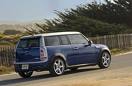
One example of this is a Mitsubishi Lancer vs. a Mini Cooper Clubman. A new Lancer costs around $17,500, which is $5,000 less than the initial cost of the Mini Cooper. Yet, when you consider what ownership costs will be with each vehicle, the Mitsubishi Lancer will end up costing you about $3,000 more after owning the car for five years.
Also realize, a Toyota Highlander will initially cost you $3,000 more than a Ford Explorer V6. However, when you consider ownership costs you will end up paying $6,500 more over a five-year period.
Motorists are very concerned with the sticker price of a vehicle when choosing a car, but many people fail to factor in the ownership costs. For example, auto loans, maintenance costs, and auto warranty, fuel costs, repair costs, and sales tax need to all be factored into the equation.
October 30th, 2008 by Hal Moses
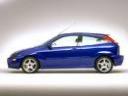 Used fuel-efficient vehicles that at one time would have been hard for dealers to sell, such as the Chevrolet Aveo and Ford Focus, are now being sold at record speed, and their prices have risen. According to J.D. Power & Associates, the ten pre-owned cars with the prices rising the fastest include the Kia Spectra, which is up almost 8%, and the Hyundai Elantra, which is almost 9% higher. Just a couple of years ago this list was dominated by large, luxurious cars, such as the Lexus LS Series.
Some prices of used cars are even getting close to that of new cars. For example, the 2006 Honda Civic has an average cost of $16,118, which is 86% of the price of a new 2008 Civic. A 2006 used BMW Mini Cooper is approximately 81% of the price of a 2008 model. Usually, three-year old cars will cost around 50%-60% of the price of their new equivalent.
This trend creates an opportunity for automakers to make premium compact cars instead of larger, luxury cars that aren’t as fuel-efficient. Consumers are looking to save money on car prices, an auto warranty, and gas prices. Large vehicles that guzzle gas are a thing of the past.


 More and more cars are being loaded with high-tech gadgets. In fact, some luxury car models have up to 80 switches and knobs to allow for advanced safety and comfort of motorists. Yet, there are more high-tech gadgets coming on the market.