October 30th, 2008 by Hal Moses
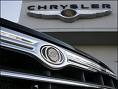
 As if people haven’t found enough reasons not to purchase a new car, recent rumors about a possible merger between Chrysler and GM have raised added doubts for motorists.
There are many questions raised by the possibility that GM may acquire Chrysler, but followers of the industry say that one question by consumers who recently bought or are thinking of buying a new Chrysler that shouldn’t be of concern is what will come of their auto warranty coverage if another carmaker purchases Chrysler.
Joe Phillippi, who is a principal with consulting and vehicle research firm AutoTrends, claims that all carmakers maintain an auto warranty reserve that will cover auto warranty expenses. Also, he says that Chrysler’s reserve would be used initially to cover claims, but if a merger were to occur the buying company would take on the responsibility.
October 30th, 2008 by Hal Moses
 According to Honda, the 2009 Element that has undergone a restyling is now on sale with a beginning price of $20,175, not including a destination charge of $670 or new car warranties. Standard on the base model is a five-speed automatic, unlike the model last year, which included a manual for $18,980. In addition, there is a price bump of less than $500 from a 2008 LX including an auto warranty.
Most casual observers wouldn’t recognize any big design changes for the 2009 Element, however there are changes, such as the updated front grille and bumper, and also different headlights.
The Element is available in three different trim levels. The basic model is the 2WD LX. By upgrading to the EX and SC models, motorists will benefit with the optional navigation system, which wasn’t provided on the previous Element. This navigation system includes such features as a rearview camera, voice activation and a USB port for media players.
October 29th, 2008 by Hal Moses
 Ford just unveiled the SmartGauge dashboard system, which will help motorists improve their fuel-efficiency. This system works by alerting drivers when they are practicing positive driving habits.
Basically, drivers will be provided with feedback, with various information levels available, which range from the “Journey†basic mode to the “Empower†mode, which is more detailed. Graphics will be displayed on the screen that gauge such things as fuel economy and engine performance, providing more information to drivers that will allow them to stretch out every gallon of gas.
One of the most challenging issues that Ford has dealt with in developing the dashboard system is driver distraction. In early versions of the system, the screen appeared much too cluttered and demanded an unsafe amount of driver’s attention. Designers solved this problem by changing to a “leaf-based†readout. The screen puts up more green leaves if the motorist is saving fuel, which makes it easy to distinguish between fuel-efficient and fuel-wasteful driving.
The SmartGauge dashboard system is going to debut in the 2010 Ford Fusion and Mercury Milan hybrids. This device will allow consumers to save money on gas, which will allow them to spend on other important things, such as car maintenance and an auto warranty.
October 28th, 2008 by Hal Moses
 For drivers who are sick of paying the high fuel prices and who aren’t willing to wait for automakers to put affordable electric cars on the market, CNN has reported that car owners are doing conversions on their gas powered vehicles to make them electric powered.
The conversion has been described as “surprisingly easyâ€, which involves taking out the guts of the vehicle, such as the exhaust system and radiator, and making replacements to some, like the fuel injector, with components that are electric. Of course, you could only say this process was “easy†if you regularly do engine swaps. Many drivers don’t even know how to change their oil on their own.
Supporting this industry of do-it-yourself are suppliers that sell the parts necessary to complete the conversion, like Electric Vehicles of America.
Once you do that work, the car should be equipped with lead-acid batteries, since lead-acid batteries remain very expensive at $10,000-$20,000. A truck that is small and has 20 6-volt batteries will reach a speed of 60 mph and run for approximately 40 miles.
Before undertaking a conversion such as this, make sure you know that it will make your auto warranty become null and void. Also, messing with the inner workings of you vehicle can be extremely dangerous if you don’t have any experience.
October 24th, 2008 by Hal Moses
 The decision to buy or lease can be a difficult one. Car shoppers should consider more than just their budget. Typically, leasing tends to be cheaper, but it also leaves drivers with no equity after the contract is up. There are some important factors to keep in mind when making this important decision.
First, you should look at the cost. Consider four factors when you’re thinking of leasing. These are the leases length, the payments monthly, the mileage restrictions, and the down payment. If you exceed the restrictions on the mileage you could ring up big fines. Also, if you hold onto a lease for more than three years you will often have to replace tires and pay for other maintenance.
Next, take a good look at your budget. Leases are almost always cheaper for short-term because there isn’t a down payment and the monthly costs are low. However, leases end up being more expensive than buying a vehicle that you are going to keep for a decade. This is assuming that you purchase an auto warranty with your car so that you don’t end up paying unnecessary expenses. But if drivers prefer to have a new car every three years, leasing is the way to go.
Also, you need to consider your life plans. If you are going through life changes, such as moving far away, or starting a family, you are going to benefit from leasing. This will provide you with the flexibility that you need.
Consider these factors and make a decision to buy or lease based on your needs. Just remember, if you buy, you want to be covered with an auto warranty to save you money on unnecessary repair costs down the road.
October 24th, 2008 by Hal Moses
 One tactic that people use to sell a pre-owned car is to detail it until it looks brand new. However, beware, a motor that is steam-cleaned won’t fix a gasket that is blown. This is why it is important to purchase an auto warranty.
Having said that, dealerships that are reputable typically won’t try to sell cars with big issues, for fear that they’ll have to fix them down the road. If you test drive a vehicle that doesn’t make awful noises and feels pretty good, chances are it is fine. Dealers don’t like to sell junky cars.
However, it is still a smart idea to have a trained professional take a look at your vehicle. If the dealer claims the vehicle was inspected by it’s mechanic, request to view the paperwork. If the dealer can’t produce them, make sure an outside technician sees the vehicle.
Also, it is important to check that the car has a clear title and that it hasn’t ever been in a big accident. You can tell the dealer to go on Carfax or AutoCheck to confirm this. Both of these sites have a fee to trace the car identification number for odometer and service registrations, and accidents. However, often dealerships will check the vehicles on their lot free of charge.
Typically, it’s safe to buy a used car from a dealership; however, it never hurts to take these quick steps to ensure you don’t get a lemon. In addition, used car warranties will give you peace of mind in case you need repairs.
October 21st, 2008 by Hal Moses
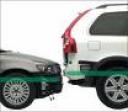 Many people believe that pickup trucks and SUVs cause extreme damage to cars in a collision because they are heavier and bigger. And although size is a factor, the main culprit in collisions involving low speeds is the mismatch of bumper heights.
In the United States, SUVs, minivans, and pickup trucks aren’t required to have any bumpers. While some car manufacturers do put bumpers on these vehicles, they usually don’t match up with car bumpers, which are required to have bumpers 16-20 inches above the ground.
In addition, pickup truck and SUV bumpers are typically flimsy. In fact, bumpers on most of these vehicles are purely decorative.
The result of bumper mismatch is a hefty repair bill resulting from even the most minor accidents. Without a bumper, there isn’t anything to protect a vehicle’s expensive sheet metal.
People wouldn’t expect a 10-mph collision to completely disable a vehicle, yet often times when bumper mismatch is involved, one or both vehicles are undrivable. To deal with this problem, motorists should make sure that their vehicle has a bumper and they should practice defensive driving. In addition, you should always have a good auto warranty in case of unforeseen circumstances.
October 20th, 2008 by Hal Moses
 Many drivers aren’t sure whether they should use regular or synthetic oil in their cars. The answer depends on the age of the vehicle, mileage, and the recommendations by the carmaker.
Older vehicles with high mileage often have excessive engine wear that allows oil to leak internally. Synthetic oil isn’t recommended on these vehicles because it is thinner than regular oil and flows freely. Using it often will cause internal oil combustion.
Many automakers today use synthetic oil in their engines. This is often the case when the car has an engine that is high performance with high compression, high temperatures for operating, and engine tolerances that are tight. If you’re thinking of switching to synthetic oil and your car still has an auto warranty, make sure to consult your dealer first.
In the right vehicle synthetic oil is a good idea (consult your owner’s manual). Although synthetic will cost you twice as much as regular, it is worth it because it lasts longer and can help your engine last longer.
October 18th, 2008 by Hal Moses
 It’s important to realize that in today’s cars the main source of power is still the battery. The battery is not just used to start the engine; it is also used to supply electrical energy that maintains the memory of the numerous computers onboard. Batteries and cable connections that are poorly maintained fail to supply the voltage needed for innovative electronic devices. This can cause a vehicle to perform erratically. Maintaining your battery and purchasing an auto warranty can save you from breakdowns. Here are a few simple do’s and don’ts that can help you maintain your car battery.
First, it is important to check cables to make sure they are tight and free of corrosion. Make sure that terminals are lubricated with petroleum jelly to keep cables clean longer. Also, the battery should be secured firmly to the mounting bracket. If it’s not, it can result in short circuits. Finally, make sure to maintain fluids. If fluid is low, distilled water should be added. If there isn’t fluid the battery needs to be replaced.
There are some important things that you shouldn’t do concerning your battery. Don’t charge your battery if it’s frozen because there is a possibility it could explode. Instead, you must replace the battery. Never charge a battery that is dead with an alternator. The alternator may be damaged in this case. Also, you shouldn’t disconnect battery cables if your car is running.
Make sure to maintain your battery so it can perform at its peak. These simple tips can help your battery last longer. Of course, you never know when your car will fail, so make sure to purchase an auto warranty that will protect you in the event of a breakdown.
October 18th, 2008 by Hal Moses
 People are always asking dealership service departments, “Isn’t that covered under my auto warranty?†A lot of drivers assume that an auto warranty allows for repairs regardless of such things as maintenance requirements, environmental conditions, and vehicle mileage.
An auto warranty is an agreement that you make with the manufacturer of the car. As the warranty purchaser, you are responsible for following specific maintenance requirements. Only if you perform the maintenance, is the manufacturer obligated to have repairs done.
Because of questionable practices that dealers have performed in the past, car manufacturers scrutinize every auto warranty claim. Consumers often interpret this as an effort to get out of paying for repair costs. However, the reality is that the repair might not qualify under the terms of the auto warranty. This could be due to things such as, vehicle abuse, expiration, or parts that aren’t covered under the agreement.
Drivers need to be extra careful and read their auto warranty thoroughly. Make sure to fulfill your side of the deal in order to have the manufacturer so the same.


 As if people haven’t found enough reasons not to purchase a new car, recent rumors about a possible merger between Chrysler and GM have raised added doubts for motorists.