August 8th, 2009 by Hal Moses
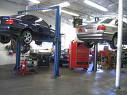
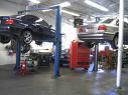 Because many people lead busy lives, they try to pick a repair shop that is close to their home. They also try to find a shop that they believe to be trustworthy. Motorists take for granted the freedom of being able to pick where their cars get repaired. This may all be coming to an end.
Cars operate through their computers, and it is necessary to have the computer codes to determine if something is faulty on the vehicle. However, car manufacturers often don’t like to release the codes. This means that independently owned repair shops might not be able to properly make repairs. In addition, drivers will be forced to take their vehicles to dealerships. This makes an auto warranty even more necessary for motorists because dealerships tend to charge more for repairs.
There are approximately 220 million cars in the country and only 21,000 vehicle dealerships. Also, there are around 130,000 businesses that make a business of repairing cars. If these businesses don’t have access to computer codes they may eventually go out of business because they won’t be able to perform many repairs on cars.
Congress has recognized this problem and therefore, is trying to pass the Motor Vehicle Owners Right To Repair Act. This bill would make it necessary for car companies to share information with the independent repair shops.
Unfortunately, you never know when your car is going to require repairs, so regardless of where you take your car for service, make sure you have an auto warranty to protect your wallet.
August 7th, 2009 by Hal Moses
 More motorists are deciding to switch to hybrid cars for better fuel-efficiency, however, just like any car; hybrids need common maintenance and occasional repairs. A regular mechanic can do work that is routine, yet you will need hybrid-certified mechanics for jobs that are more extensive.
According to a Toyota service director in Tampa, hybrid work at the dealership has been small. There are some vehicles with issues, but for the most part repairs are the result of accidents. The most costly repair on hybrids is for battery replacement. In a vehicle that isn’t covered by an auto warranty, you will pay approximately $3,000 just on the part.
The best thing to do is to find a technician to repair your car before you really need it. This way you won’t have to make last minute decisions. Also, make sure that the technician is certified in hybrid repair.
Finally, most new car warranties for hybrids cover 100,000 miles or 8-10 years. Make sure you know if your auto warranty requires that you get service from a specific repair shop.
August 7th, 2009 by Hal Moses
 Some people think of used cars as being dirty, junky and old. But a different market is making savvy buyers who are looking for updated vehicles pay attention. The bonus is that these cars don’t have the sticker price of new cars.
Certified pre-owned cars have undergone rigid inspections and been refurbished by their manufacturer. Also enticing is that they are backed with an extended auto warranty. Automakers are realizing that they can’t ignore the certified vehicle market.
A recent study shows that certified pre-owned car sales have gone up 46% since the year 2000. It is estimated that 1.5 million certified used vehicles are sold yearly, which is equivalent to approximately 10 % of the sales of new cars.
So what are the best and worst certified pre-owned cars to purchase? Forbes.com has put out a list to help consumers make a good purchase.
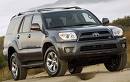
At the top of the list of the best CPO cars are Honda Accord and Toyota 4Runner. Following is the Acura TL, and Subaru Impreza. Also, the Lexus GS tops the list.
Cars on the worst list are the Saturn Relay, and Jeep Grand Cherokee. Also, the Volkswagen New Beetle, Pontiac G6, and Mercedes Benz E Class make the list.
Certified pre-owned can be a great way to purchase an updated vehicle without the updated cost. Another perk is that they come with an extended auto warranty. Just remember to keep in mind the best and worst CPO car lists when considering a purchase.
August 6th, 2009 by Hal Moses
 More and more cars are being loaded with high-tech advances. In fact, some luxury car models have up to 80 switches and knobs to allow for advanced safety and comfort of motorists. Yet, there are more high-tech gadgets coming onto the market.
Soon there will be sign recognition systems that will be able to read wrong-way signs and speed limits. This will come on the market in 2010.
Cameras could replace sideview mirrors in the future. Images would be displayed on the rearview mirrors on the edges, or on the instrument panel.
We may see chatty cars in the future. Developers are trying to create a network that would monitor signals from car systems and warn other cars. For example, skidding due to slick roads could be transmitted to warn other drivers.
Bumper bags could help SUVs be less deadly when hitting a low-riding car. This has been shown to reduce intrusions and cause less injuries.
High-tech gadgets are great for motorists, but only if they learn how to use them before getting on the road. In addition, with any new technology, drivers should have an auto warranty to protect themselves from technology failure.
August 6th, 2009 by Hal Moses
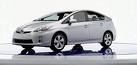
 The Prius is now one of the most popular vehicles in the country. This is actually quite amazing because this is a hybrid electric vehicle, which requires people to embrace change. With any change, people like to protect themselves. Many people feel better purchasing a hybrid if they have an auto warranty to go along with it. The billion-dollar question that innovators face is whether people will resist or embrace innovation. Apparently, Toyota got it right, because thousands of people are buying the Prius.
People accustomed to a regular vehicle would struggle to get the Prius to move forward. In addition, people probably couldn’t figure out how to put the car in reverse. However, these are not hard lessons to learn, they just require people to change their way of thinking. To start the Prius you press a button located on the dashboard twice. To make your car go forward or backward you manipulate a small stick that comes out of the dashboard.
People might fear technology because it is seductive, yet they might also have a fear of not being able to change. Either way, it is good to protect yourself. This includes purchasing new car warranties that will cover you in the case of faulty technology. Innovators never really know which way the cash register will ring. However, Toyota got it right with the Prius.
August 5th, 2009 by Hal Moses
 Many motorists don’t realize that a little bit of routine maintenance can keep you free of expensive car repairs. And most maintenance takes no more time than refilling the fluid for your windshield wipers. Here are a few tips to help keep drivers safe and free of trouble.
Make sure to change your oil every 3,000 to 5,000 miles. However, you should check your oil at least once a month. You want the oil line on your dipstick to be between the marker lines. If the oil looks dirty or black, it is time to have it changed.
If you’re having trouble shifting gears you are probably having transmission problems. Check the level of the transmission fluid to determine if it is low. Low transmission fluid could indicate a leak. You should refill it with the lubricant your car recommends. If you see leaking on your driveway take your car to a mechanic.
Also, check your coolant levels. You should have your radiator flushed every two years and change your coolant. In addition, make sure your radiator is corrosion free.
Finally, check your tire pressure every two weeks. Consult your owner’s manual for the correct pressure, and fill your tires accordingly. Remember, both overinflation and underinflation affect safety and fuel efficiency, so it is important to maintain tire pressure.
These simple maintenance tips can keep you from having major, costly repairs. However, it is important to purchase an auto warranty because you don’t want to be faced with unnecessary expenses down the road.
August 5th, 2009 by Hal Moses
 If you’re purchasing a pre-owned car you need to find out as much history as possible about it. The car may have problems that are not apparent from a visual inspection or a test drive.
A car history report is a good way to find out what you’re getting. This is a report prepared by a third party that is a compilation of information from DMVs, RMVs, and other sources. A car history report will give you an overview of what the car has been through.
When getting a car history report look out for the following things. This is not to say that you shouldn’t buy the car based on these issues, but certainly ask questions.
If a car has had a lot of owners, chances are it hasn’t been cared for lovingly. These cars have probably endured more abuse.
Some areas of our country are easier on cars than others. For example, extreme winter conditions are tough on vehicles, as are flood areas and extreme heat.
Make sure the name and description of the car match up with the actual car. Read the description carefully to avoid vehicle fraud.
Car history reports, such as those from CARFAX are comprehensive and can save you from purchasing a lemon. Also, to protect yourself, purchase an auto warranty to avoid unnecessary expenses down the road.
August 1st, 2009 by Hal Moses
 There have been several Front Range companies who have been trying for years to improve upon auto batteries. For them, John McCain’s offer of $300 million to the developer of the battery responsible for leapfrogging electric and hybrid vehicles was very enticing.
Allowing vehicles to run on batteries instead of engines would reduce the consumption of gasoline and cut down on our country’s oil dependency.
However, the batteries aren’t cheap. In fact, a lithium-ion battery is tens of thousands of dollars, and its technology hasn’t even debuted in a commercial car. This is why consumers may want to invest in a good auto warranty.
Even without McCain’s prize, there are plenty of incentives to improve batteries. People are already putting a great deal of money into researching and developing batteries because technology is in high demand.
However, the U.S. needs to urge for additional battery research because China, Korea, and Japan have already forged ahead.
With the improvement of battery technology, people will soon forget the days of dead batteries and calls for emergency roadside assistance. Instead, batteries will be associated with electric and hybrid cars.
August 1st, 2009 by Hal Moses
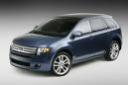 Americans need to take action immediately to help the nation’s economy improve and bring back American jobs. Americans have purchased 11 million foreign vehicles over the last 10 years. That is equal to about $25.5 billion exported out of the U.S. economy. Buying American cars with an auto warranty would improve the economy greatly.
It seems that Americans have become numb to the on-going announcements that the “Big Three Auto Makers†are cutting jobs and closing plants. This year alone, Ford Motor Co. announced that they were closing three plants and cutting more jobs. Chrysler Motors had to close three plants and cut approximately 12,000-15,000 jobs. GM announced a loss of $11.8 billion in the first quarter of 2008, which is its second largest loss ever, and also had to close plants.
Over the last 10 years American cars have improved greatly in quality. In fact, J.D. Powers has recognized that American cars have had substantially higher improvement in comparison to their foreign competition. It’s time for Americans to change their way of thinking and buy American cars. And consumers can always rest assured that they won’t be paying unnecessary costs if they have new car warranties.
August 1st, 2009 by Hal Moses
 Here is some information that parents hate to hear: the Insurance Institute for Highway Safety tested booster seats for safety and found that 13 models out of the 41 that were tested rated so poorly in the area of seat belt fit that they aren’t recommended by the IIHS. Parents try to do everything possible to keep their kids safe, such as maintaining their cars with the addition of an auto warranty and buying safety seats, so this news is unfortunate.
According to Adrian Lund, the IIHS president, the 13 seats not recommended don’t provide kids with the full benefit of an improved lap belt fit. She claims that these boosters may make children more comfortable, but they don’t allow seat belts to be positioned in such a way that provides optimal protection.
The IIHS puts out a reminder to parents that booster seats aren’t intended to provide extra crash protection; instead they allow for a better fit and make the seat belt more effective. Seat belts were designed with adults in mind and until a child is 4 feet 9 inches tall, they won’t fit correctly. An efficient booster seat reroutes the seat belt across the bony parts of a child’s body and away from the abdomen, which is a vulnerable injury area. However, the IIHS did say children are better off riding in any booster seat, rather than unbuckled.
Here are the tested seats that aren’t recommended:
• Cosco/Dorel (Eddie Bauer) Summit
• Graco CarGo Zephyr
• Compass B505
• Compass B510
• Evenflo Generations
• Dorel/Safety 1st (Eddie Bauer) Prospect
• Cosco/Dorel Traveler
• Cosco Highback Booster
• Cosco/Dorel Alpha Omega
• Evenflo Chase Comfort Touch
• Safety 1st/Dorel Intera
• Safety Angel Ride Ryte backless
• Evenflo Big Kid Confidence


 Because many people lead busy lives, they try to pick a repair shop that is close to their home. They also try to find a shop that they believe to be trustworthy. Motorists take for granted the freedom of being able to pick where their cars get repaired. This may all be coming to an end.