June 12th, 2009 by Hal Moses
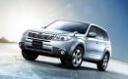 Small SUVs serve the purpose of ferrying people around on weekdays, and then bouncing through the countryside on the weekends. The 2009 Subaru Forester rises to this challenge with its new DC3 chassis, double wishbone rear suspension and AWD system.
Although the Forester was originally a station wagon, the third-generation model is all SUV. This five-door hatchback has been restyled to have somewhat of a truck appearance. This vehicle comes in five different trims; 2.5X, 2.5X Premium, 2.5X L.L. Bean, 2.5XT, and the 2.5XT Limited.
The Forester’s interior won’t disappoint. It has clean lines, comfortable seats, and a stylish appeal. Also, the visibility in this vehicle is superb which translates into a safe, secure drive. In addition, cargo space is ample because Subaru has tucked the inner-fender wells, which enhances capacity.
The 2009 Forester is a well-rounded vehicle great for everyday use and weekend play. Its base price starts at $19,995 and the top of the line XT Limited is $28,195. The wide range of prices allows a model for all different consumers, complete with an auto warranty.
June 12th, 2009 by Hal Moses
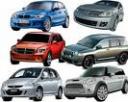 An accelerating driver trend from SUVs and pickup trucks to small fuel-efficient cars will help reduce rollovers, but experts on safety are worried that a smaller fleet presents serious health risks, despite anti-collision systems, air bags, and other safety advances.
According to the Insurance Institute for Highway Safety, which measures the performance of cars in crash tests, shifting to small cars is going to make problems worse. They claim that people are better off in a vehicle that is bigger, not smaller.
U.S. carmakers have been distressed and are therefore retooling plants in Latin America, Europe, and around the world to get more compact cars to Americans in upcoming years and try to meet federal standards on fuel economy that are tougher.
At least 40,000 motorists are killed on roads in America annually in traffic accidents. Approximately three-quarters of these people are from passenger vehicles and two-thirds of them from cars.
Consumers are concerned with saving auto costs, such as car prices, auto warranty prices, and gas costs, yet safety needs to be their #1 concern.
June 12th, 2009 by Hal Moses
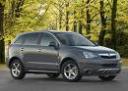 The Saturn Vue SUV green line has better fuel economy than the Vues that are gas only. They feature a simple hybrid system that Ford and Toyota use. The green line is only around $1,500 more than the price of a comparable Vue that only operates on gas. This allows consumers to be able to afford an auto warranty and maintenance costs. The retail price, $23,000 is approximately $4,000 under the Ford Escape Hybrid, which is the least expensive hybrid to date.
The Saturn Vue hybrid offers a 20% fuel savings over the gas operated Vue. The Vue Green line supplements an engine that is four cylinders with electric power. It gets 27 mpg in the city and 32 mpg on the highway. In comparison, the gas only Vue gets 22 mpg in the city and 27 mpg on the highway.
The Vue Green Line is the first SUV hybrid available with only front wheel drive. They aren’t offered with all- or four-wheel drive, as with other hybrid SUVs on the market.
The “green†Vue doesn’t give extraordinary fuel savings, but it is a good opportunity for consumers to purchase an SUV hybrid for under $25,000. It is important for motorists to do their homework and calculate the cost of owning the vehicle. For example, consider new car warranties, car maintenance costs, and insurance on the SUV.
June 11th, 2009 by Hal Moses
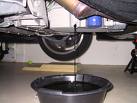
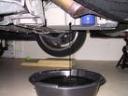 The recommended intervals for oil changes have increased a significant amount over the last ten years. It used to be that oil changes were recommended every 3,000 miles, but now recommendations are for every 8,000 miles. This is great news for drivers because it means less time at the mechanic and less money spent. However, there are a few cautionary notes to consider.
First of all, consult your owner’s manual for the “maximum recommended intervalâ€. Make sure you don’t extend beyond that number because saving $40 on an oil change is not worth having an $800 repair due to sludge buildup.
Second, if your driving type falls under “heavy duty†you will need to change your oil more regularly. Often, drivers don’t realize that daily stop-and-go commuting falls under this category. Also, if you use your vehicle for short trips with little highway driving you many need shorter oil changeouts.
Finally, you should use the specific oil type/grade recommended by the carmaker. Failing to use the right oil type can result in poor car performance, engine damage, and even void the terms of your auto warranty.
Although less frequent oil changes are convenient for consumers, people need to follow these cautionary notes. After all, you don’t want to ruin an engine because you didn’t add a couple of quarts of Pennzoil. This is why an auto warranty is always a good idea, too.
June 11th, 2009 by Hal Moses
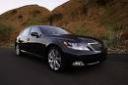 What is there to say about the single most expensive hybrid on today’s market? The Lexus LS600hL is a luxurious hybrid that makes it known to everyone that you have $105,000 to spend on a car that is environmentally responsible.
People may not be all that concerned about how the electric motor works in combination with the gas powered V-8 because the most outstanding thing about this extended LS model is the cavernous and most luxurious interior. The dashboard, as well as the seats is covered in leather that is extremely supple and stitched together with precision. Metal, wood, and metallic colored plastic are used tastefully, and can be found on the armrests in the backseat and on the dashboard. Oh, and by the way, this car parks itself!
If you have $105,000 to spend on an environmentally friendly vehicle this is a great choice. But at this price, don’t dare drive it out of your driveway without an auto warranty. It could cost you an arm and a leg to fix this car.
June 10th, 2009 by Hal Moses
 More and more cars are being loaded with high-tech gadgets. In fact, some luxury car models have up to 80 switches and knobs to allow for advanced safety and comfort of motorists. Yet, there are more high-tech gadgets coming on the market.
Soon there will be sign recognition systems that will be able to read wrong-way signs and speed limits. This will come on the market in 2009-2010.
Cameras could replace Side view mirrors in the future. Images would be displayed on the rearview mirrors on the edges, or on the instrument panel.
We may see chatty cars in the future. Developers are trying to create a network that would monitor signals from car systems and warn other cars. For example, skidding due to slick roads could be transmitted to warn other drivers.
Bumper bags could help SUVs be less deadly when hitting a low-riding car. This has been shown to reduce intrusions and cause less injuries.
High-tech gadgets are great for motorists, but only if they learn how to use them before getting on the road. In addition, with any new technology, drivers should have an auto warranty to protect themselves from technology failure.
June 7th, 2009 by Hal Moses
 Families think of the safety of their children as a top priority. Unfortunately, among children age’s 3-14, car accidents are the number one cause of death. Parents need to take extra precautions in order to help their children stay safe. They can do this by having an auto warranty to ensure that repairs are performed, and properly restraining children by using car seats correctly.
More than 1,500 children under the age of 14 were killed in car accidents in 2003. In addition, 220,000 injuries occurred. However, using a car seat effectively can reduce these incidents drastically. In facts, studies show that deaths are reduced by approximately 70%. Alarmingly, about 75% of car seats aren’t installed properly. Also scary is that half of the deaths are children who aren’t restrained at all.
General Motors recognized this problem by creating a program called Safe Kids Buckle Up. This program helps parents understand how important it is to restrain children correctly. The program has inspected over 900,000 car seats around the nation.
June 7th, 2009 by Hal Moses
 SUVs are available in a wide array of prices and sizes. They are more versatile than any other vehicle. They have varying cargo carrying options, carry up to eight people, and allow drivers to be higher than cars. In addition, they can tackle off-road terrain. There are car based and truck based SUVs. Which is the best for you?
Gaining popularity are car-based SUVs. These vehicles are on car like unibody platforms. In addition, they use a suspension that is completely independent, and have all-wheel drive. They usually perform better in fuel-efficiency, handling and ride comfort than truck based SUVs. Also, in CR testing they generally rate higher overall. They can be driven off-road in mild situations.
Truck-based SUVs are built on a body on frame platform. They allow for a larger towing capacity than car-based SUVs. Also, the ones that have four-wheel drive can tackle off-road terrain that is serious. The handling on these vehicles, however, can be more cumbersome. Also, their ride can be a little jolting.
SUVs are a great option if you are looking for cargo space versatility, a large passenger capacity, and off road options. Do your homework on such things as an auto warranty, maintenance costs, and fuel-efficiency before deciding on an SUV. Also, have in mind what your needs will be before showing up at the dealership.
June 7th, 2009 by Hal Moses
 Anti-lock braking systems, or ABS, were made available for cars in America in 1978. Mercedes-Benz was the first carmaker to install them on their vehicles. Then, Cadillac began installing ABS on their luxury vehicles in 1986.
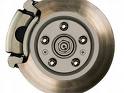
ABS utilizes onboard computers, which have links to the wheel sensors, that make the brakes automatically pump at a rapid rate. Anti-locking brakes apply pressure selectively by being able to determine which of the wheels might lock, and then lowering the pressure of the brakes on those wheels so they can rotate properly. ABS will only work in a panic situation, not in normal braking circumstances.
It is important to keep in mind that ABS won’t create a shorter stopping distance. Yet, its advantage is that drivers can maintain control and avoid skidding.
Drivers need to know how to use ABS correctly. The proper way to brake with this system is to stomp and steer. While many drivers are accustomed to pumping, this isn’t correct for this system. Instead, drivers should apply a strong pressure down on the brake without letting up.
Auto safety is becoming a big priority for motorists. New car technologies are allowing for advanced safety features that protect passengers and drivers. Drivers should also protect themselves by buying an auto warranty for their car. This allows motorists to have peace of mind.
June 6th, 2009 by Hal Moses
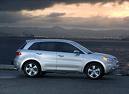
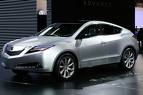
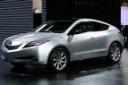 The Acura ZDX was one of the car models that were the most intriguing at the 2009 New York auto show. This car is part crossover, hatchback and sport vehicle. According to Acura, this car is designed for the Baby Boomers, which has a growing population. In fact, it is projected to be about 80 million people in the year 2010.
There are important crossover attributes in the ZDX, such as a seating position that is high in a distinct stylized package. Whereas the carmaker’s MDX crossover with seven seats is aimed at families, the ZDX is targeted for empty nesters.
Information for the price of the ZDX and auto warranty details hasn’t been announced yet, however, insiders say it will be in a position above the MDX in the lineup. This means that the ZDX’s starting price will probably be above the $40,990 base price of the MDX.


 Small SUVs serve the purpose of ferrying people around on weekdays, and then bouncing through the countryside on the weekends. The 2009 Subaru Forester rises to this challenge with its new DC3 chassis, double wishbone rear suspension and AWD system.