Auto Warranties Links

Weblogs


Blog Features


Auto Warranty

Auto Warranty: Ford Still Facing Fallout on Faulty Switch
fordswitch
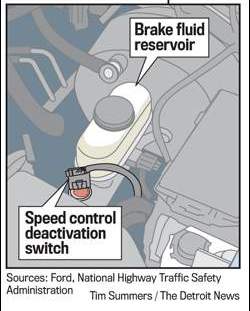
Auto Insider reports that Ford is still contending with fallout from electrical switch component allegedly involved in over 500 fires and over 1500 complaints.

“Al Gavegan Sr.’s death in a house fire last summer left family and friends in San Antonio searching for answers — and they say the evidence leads straight to Ford Motor Co. and a faulty electrical switch.

The retired government contractor was well-known as the guy who operated the time clock at high school football games and taught kids with special needs. On birthdays, he asked friends to forgo gifts in favor of teddy bears he could donate to sick children at a local hospital.

Hundreds attended his funeral after the 76-year-old died Aug. 14 in a blaze that started when a late-night fire spread from his 1994 Mercury Marquis parked in his attached garage, investigators found.

A police report listed the fire’s probable cause as “an electrical malfunction in the engine compartment of the vehicle.”

Gavegan’s family soon discovered that his Grand Marquis was one of 16 million Ford vehicles built with an electrical switch that has been linked to nearly 550 fires and about 1,500 complaints.

Since 1999, Ford has recalled 6.85 million vehicles with the switches, making it one of the largest auto safety recalls in U.S. history. On Monday, Ford again expanded the recall of vehicles with the speed control switches in question. The latest recall included 155,000 2003 model SUVs and pickup trucks. But millions of vehicles with the switch, including Gavegan’s Grand Marquis, have not been recalled.

Ford spokeswoman Kristen Kinley said the company has been vigilant in recalling vehicles. “We’re continually looking at our products in light of how difficult this particular recall has been.”

Despite five recalls and an exhaustive federal safety investigation, Ford has been unable to put an end to switch issue.

Ford faces more than 20 lawsuits around the country — including a wrongful death lawsuit to be filed today by the Gavegan family in Bexar County Court in Texas.

Kinley says it is investigating the cause of the Gavegan fire and hasn’t reached any conclusions.”
(continue reading here)


Posted in Auto Warranty

Auto Warranty: A Warranty More Expensive to Handle in Canada?

canadaA Canadian automotive journalist is asked to explain the difference in warranty coverages between the US and Canada.

Q: I read with interest your recent column regarding different recommended mileages for similar repairs. I have always wondered why some North American car companies offer basic warranties of three years or 60,000 kilometres in Canada, whichever comes first, while at the same time they offer three years / 60,000 miles in the U.S.

Should they not be offering us at least 90,000 kilometres to make up the difference? I have asked car dealers this quite often but have got no answer except a smile and a shrug. My answer to them is: When you decide to get serious, let me know.

By the way, I drive a Hyundai, mainly for the above reason.
A:“…We get short-changed on warranties by more than one manufacturer, compared to our cousins to the south.

Why? Call far enough up the food chain at any of the Canadian head offices and you’re likely to hear phrases like “market forces” or “competitive positioning” or “consumer demands.”

From my own experience in closed-door meetings with manufacturer representatives, most U.S. head-office executives consider Canada a very expensive place to have warranty repairs completed. Canadian dealers, in fact, are constantly berated by these officials due to their perception of our higher warranty costs.

In our defence, we have a much harsher climate and higher road-salt use than the average U.S. jurisdiction, leading to more expensive repairs. And even our universal health-care system doesn’t keep our technician labour rates from exceeding the American national average.

As well, our widely spaced dealer groups in thinly populated areas run up the costs of distributing parts and training technicians. I also like to believe that the average Canadian car consumer is more aware of his or her rights than even the most litigious U.S. auto buyer, and this type of consumerism keeps warranty bills rising.

All that aside, however, my quick Internet survey of three Detroit and two Asian carmakers shows that for the 2007 model year, only General Motors and Kia offer longer standard coverage for vehicles sold in the U.S. than in Canada. Chevrolet offers three years or 60,000 miles in base warranty coverage on its standard car line in the U.S. while Canadians get only three years or 60,000 kilometres.

Kia offers comparable base coverage for Yanks and Canucks, but its powertrain coverage is 10 years or 100,000 miles south of the border and only five years or 100,000 kilometres up north.

Note, though, that the U.S. powertrain warranty is not transferable and applies only to the original owner. Most buyers won’t keep their cars for a decade, and this helps the manufacturer keep its costs down. In Canada, warranties must be transferable.
Source

Posted in Auto Warranty

Auto Warranty: Road Hazard Coverage and Potholes

pot holes
Personally, I’ve never seen a pothole big enough to fish in but it would be comparable to the hole in your wallet that most tire purchases create. When that new rubber bites into a pothole 6 months later,you’ll be wondering why you didn’t consider getting that Road Hazard warranty on your tires.

Manufacturers’ will warranty against defect,but, unfortunately, there is no auto warranty or tire warranty that will protect you against your town’s insufficient road repair budget. You have an auto warranty, give due thought to a road hazard warranty too.

“Most tires come with a warranty which covers workmanship and materials. In other words, the tire maufacterer covers things which are in their control, like defects. They are not interested in warranting the condition of the roads or your inability to hit debris.

This is where a Road Hazard warranty can save you money and aggravation. Road Hazard warranties are one of the best values, yet one of the most misunderstood benefits. Let’s start off by expalining exactly what is a Road Hazard warranties and how does it save me money?

Most Road Hazard warranties are set up to protect you, from paying full price, even if you happen to get a flat or even destroy a tire beyond repair. If you are fortunate enough to have purchased the warranty, you will only pay for the amount of tread that you used prior to the needed replacement. (This is called pro-rated).

Here is an example. Let’s say your tire is 1/2 way worn at the time of the flat. With tires averaging $100 each, your replacement cost would only be $50.00. Much better than full price, yes? Definitely – great value.

Typically, Road Hazard warranties will cover things like nails, glass, metal, stones etc. and almost anything else that could puncture or damage a tire. Some Road Hazrd packages provide a nationwide coverage, which are great for people who are traveling, or vacationing, because you now have peace of mind knowing that you are protected while away from your local area.

In addition, many Road Hazard warranties offer other benefits like free rotations and free balancing (check where you purchase your tires for all the details). Regular maintenance is the best way to extend the life of your tire and get as many miles as possible for your investment.”
from MyHonestMechanic/GeneGrant

Posted in Auto Warranty

Auto Warranty: Buzz for Hybrids Unwarranted?

hybrids2No matter what auto warranty covers your hybrid, the concept itself is not turning out to be the big money maker that foreign and domestic brands had imagined. Since there is no auto warranty that covers resale or secures a good return on the premium consumers pay for hybrids, you might want to re-think a hybrid purchase.

“A few years ago, automakers decided to put hybrid technology in regular models. The hope was to move beyond the geek chic of the Prius and win over everyone else. Hybrid would be another option, like , say, navigation. If enough people bought hybrids, carmakers figured, they would achieve sufficient economies of scale to eliminate the big premium over conventional models.

That hasn’t happened. And some models have suffered badly. Honda Motor Co. (NYSE:HMC – News) sold 70% fewer hybrid Accords in 2006; Toyota has sold 24% fewer Lexus RX 400h sport-utility vehicles so far this year. The fuel savings are simply too puny to offset the hybrid premium. With gas at $2.50 a gallon, it would take 10 years to recoup the extra $3,000 cost of the Accord hybrid.
[..]
Getting prices down–and not by discounting–is the long-term solution. That means finding a way to make the cars more cheaply. Batteries account for about half the hybrid premium. But cheaper lithium ion cells won’t appear for several years. Cutting costs further requires achieving those elusive economies of scale, which means building and selling more hybrids. That’s Toyota’s strategy; it hopes to sell 160,000 Priuses this year, up from 107,000 in 2006.”
(Source)

Posted in Auto Warranty

Auto Warranty: Choosing the Right SUV for Your Family

saab suv
After a lot of thought you have decided that you want your next vehicle to be an SUV. You are coaching little league and your wife does a lot of flea marketing and an SUV fits your family profile the best.

You’ve already looked into car loans and you have investigated auto warranties – new car warranties and extended warranties – and now you are simply trying to figure out what size and stye SUV is right for you.

Edmunds.com lists the following considerations:

  • Size/Market Segment: Sport-utility vehicles are generally classified into three groups: mini/compact, midsize and full-size. As you move up in size you also move up in engine power, towing ability, passenger room and price.
  • Price: Compact SUVs are the most affordable, with prices for base models starting at less than $20,000. Mid- and full-size sport-utility vehicles vary greatly, with base models starting in the mid-$20Ks and going all the way up to the mid-$40Ks. Luxury SUVs start around $40,000 and top out over $100,000.
  • Engine/Fuel Economy: Compact SUVs offer both four- and six-cylinder engines, while midsize sport-utes typically come standard with six-cylinder engines, with V8s as options. All full-size SUVs use V8 engines. The most economical four-cylinder compact SUVs can achieve mileage figures in the mid-to-upper 20s, while most six-cylinder sport-utes average in the upper teens (though the handful of gas-electric hybrid models do much better than that). Full-size vehicles generally get between 12 and 20 mpg.
  • Safety: Increasingly, important safety features like side curtain airbags, rollover protection systems and stability control can be had on all sizes of SUVs and in all price brackets. Even if you’re shopping for a budget sport-ute, you should be able to get full airbag coverage and stability control, at least as options. One thing to keep in mind is that even with all of today’s technology, the vast majority of SUVs still don’t stop or handle as well as cars. Savvy buyers should read up on the braking and handling performance of the models that interest them.
  • Luxury Features/Convenience: Most compact sport-utility vehicles offer basic amenities along with simple upgrades like CD changers, automatic climate control and leather. Midsize SUVs typically come packed with convenience features, while offering additional luxury amenities as options. The full-size category offers the widest array of luxury SUVs, although several models also come in less opulent versions for more rugged use.
  • Passenger Capacity/Interior Space: All but a few SUVs are designed to carry at least five passengers. The rear seats in most compact SUVs are tight for three adults (although many offer fore/aft adjustment to maximize the available legroom), while most midsize and full-size sport-utes offer comfortable second-row accommodations. Many SUVs, from compact to full-size, now offer the option of adding a third-row seat for additional passenger capacity — these rows are usually intended for use by small children only.
  • Cargo Capacity: All sport-utes allow you to fold or remove the rear seats for more cargo capacity. (Many SUVs with third-row seats allow you to fold them into the floor.) Compact sport-utes top out at about 70 cubic feet of capacity, while midsize SUVs can expand to as much as 100 cubic feet. Full-size SUVs offer cargo areas in excess of 100 cubic feet.
  • Car-Based vs. Truck-Based: Car-based SUVs generally provide sharper handling, a more comfortable ride and, in some cases, more interior room. Truck-based sport-utility vehicles are able to tow more weight, are more capable off-road and are generally sturdier all around due to their truck-derived hardware.
  • 2WD/4WD/AWD: Two-wheel drive means that only the front or rear wheels provide power to the vehicle. Four-wheel-drive vehicles allow the driver to select between two- and four-wheel drive, and provide low-range gearing for off-roading. All-wheel-drive vehicles automatically distribute power in varying degrees to the wheels with the most traction.
  • Operating Costs: Since compact SUVs are generally smaller, lighter and have less complex four-wheel-drive systems, their maintenance and fuel costs are generally lower. With higher sticker prices and larger engines, midsize and full-size sport-utes generally get poor mileage and are more expensive to insure.
Posted in Auto Warranty

Auto Warranty: GM Extends Warranty on Crate Engines

crate engine
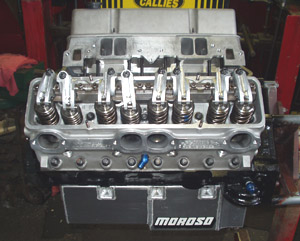
Having a son with ambitions to one day rebuild a few cars, I took interest in the latest news from GM describing their decision to extend their warranty on their crate engines.

“General Motors’s Performance Parts unit is extending the warranty offered on its crate engines to 24 months or 50,000 miles, whichever comes first. Previously, the warranty was for 12 months or 12,000 miles.

A crate engine is a complete replacement engine packed in a shipping crate.

The new warranty periods cover thousands of parts, from spark plug wires to crate engines, and will be applied to GMPP crate engines, transmissions and components installed in or purchased for street legal automotive applications after March 1, 2007, and is transferable to subsequent owners (by providing required documents to any purchaser of the vehicle in which the assembly/component was originally installed), according to a GM news release.

GM also said it added a 12-month/12,000-mile warranty to its Performance Parts components, transmissions and short-block assemblies, effective March 1.

The warranty does not include any crate engines that are marketed and sold for race applications, including part numbers 88958602, 88958603, 88958604, 12498825, 12498826, and 12498827.

“When we develop crate engines, we put them through some of the most demanding durability testing on the planet,” says Randy Leininger, engineering group manager of GM Performance Parts. “We’re focused on exceeding the customer’s expectation, so if they don’t pass our tests, we don’t sell them, it’s that simple.”

GM Performance Parts crate engines undergo a 50-hour, full-throttle engine dynamometer validation, requiring that the engines perform from peak horsepower to peak torque. GMPP also installs crate engines in its own engineering vehicles for ongoing testing and continuous improvement, the company said.”
from The Daily Auto Insider

Posted in Auto Warranty

In the Days Before Auto Warranties

model a
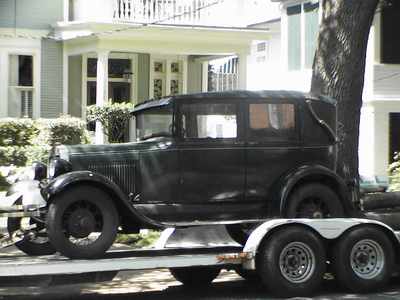
Before there were auto warranties or extended warranties, or any kind of reassurance at all, folks use to jump in cars like this 1929 Model A, pictured here, and take to the road without a any protection at all. It had to be exhilarating to be one of those folks who experienced the freedoms of the road for the first time.

Little could they imagine what the auto industry would become what it has in this country, nor could they foresee how the American highway would become myth and legend. And my guess is if they had seen a hybrid back then, they might have never started driving at all, but, be that as it may, thanks to restoration services such as those available at Select Motor Company, the beauties of that era are being preserved.

Here is a bit of the story on the car depicted here,taken from the Select Motor Company website. But be sure to visit this page to see all 28 pictures.

1929 Model A

Restoring History One Step At A Time

“This 1929 Model A has been in the same family since the early 1960’s. The current owner actually learned to drive on it. As you can imagine, this Model A has great sentimental value. However, the owner has become quite frustrated with drivability issues relating to the fuel system. Our number one job is to make the rusted fuel system new and reliable. No simple task because the fuel tank encompasses the firewall, dashboard and fuel system all in one component. Oh, and did we mention, not reproduced! Stay tuned as this project unfolds.

After beating the bushes and calling numbers of suppliers we accepted the fact that Model A gas tanks are not being reproduced.

Cutting the old tank apart was our first step in building a new Model A tank. We salvaged all of the useable pieces and brackets including the cowl shell. After sandblasting the cowl shell it was chemically treated with rust guard.

Our tank began by fabricating the panel to hold the dash bezel, fuel gauge and serve as a dash board. A raised ridge was rolled into the metal to duplicate the original dash board. The bottom section of the tank was added to the face panel and then baffling was installed.

A new top section of the tank was installed to fit inside of the original cowl shell. The top section was chemically sealed before being welded to the cowl shell.

The filler neck was brazed into the top section. Original bracketry was brazed back into place as well.

Pressure testing, chemical sealing inside and out and a preliminary test fit was preformed prior to the finish work.

Finish work, a new fuel gauge, fuel lines, and a fresh dash bezel and we will be ready for installation.

Our 1929 Model A Ford will soon be busting bugs and burning gas.
Without leaks!!”
Source

Posted in Auto Warranty

Auto Warranties: Don’t You Wish There Were Driver Warranties Too?

driving

Used cars have warranties and extended warranties. New cars have warranties. Don’t you wish that drivers had warranties too? Something to certify that a driver is guaranteed to possess courtesy, common sense and good driving skills before they are licensed?

Alas, that is not to be. All of the cars around you are protected by warranties but their drivers come with no guarantees. That is why it is incumbent upon you to learn to drive defensively.

What follows is an abbreviated list of defensive driving how-to. Go directly to the article for more details.

  1. Allow enough space ahead.
  2. Look ahead.
  3. Have an escape route.
  4. Don’t depend on other drivers.
  5. Keep your speed down.
  6. Adjust for hazards.
  7. Avoid frequent lane changes.
  8. Use lights and signals.
  9. Keep a proper driving position.
  10. Wear your seat belt.
  11. Cut out distraction.

Be sure to pass these along to your teenage driver too.

Posted in Auto Warranty

Auto Warranty: Ford Uses Hybrid Innovation for Advancement in Industry

Energy Efficient Technology the Key to Automakers’ Future

Ford Motor Companies are betting on hybrid technology to take their vehicle sales out of a slump and into the energy-efficient-car-making revolution of tomorrow. The new Ford Edge was showcased at the Washington D.C. auto show in January as an example of Ford’s advancement.

Ford finds the Washington audience of particular interest in that congressional participants and government leaders fighting for the environment and encouraging safer fuel-emissions practices are readily available for criticism. Ford and like-minded auto companies are working with the government in an attempt to produce energy efficient, significantly less pollutant vehicles for America’s consumers. Ford is even cleaning up their diesel act;

In the U.S., 2007 promises to be a milestone year for diesel vehicles. Cleaner diesel fuel was phased in nationwide in October 2006, enabling a new generation of diesel engines for 2007 and beyond.Ford researchers are developing new concepts to address the challenges with diesel of preserving high torque and efficiency, while reducing noise, smoke and odors.

See Also

Posted in Auto Warranty

Auto Warranty: Higher Gas Prices Can’t Lower SUV Sales

Cars.com Reports SUV and Crossover Models are Still In Demand

Cars.com’s bet is in favor of a good year of sales for SUV and Crossover car models over the next year. Many automobile industry leaders were assuming the opposite in practical application of higher gas prices and the reputation of SUV style vehicles to be gas guzzlers. Fortunately for SUV and Crossover sellers, the popular design isn’t going sour due to the cost of gas.

Automakers can thank innovation and the pressure for releasing vehicles with better fuel efficiency for saving their precious SUVs. The public is aware that auto manufacturers are being scrutinized for energy efficiency and SUVs are going in the right direction.

"Manufacturers are doing a good job of making SUVs and crossover vehicles more fuel-efficient, which will be more attractive to consumers," said Patrick Olsen, managing editor of Cars.com.

As long as SUVs are performing more highly on energy consumption tests, their overall design appeal will win over customers ready to drop thousands on a new means of transportation. The SUV is what consumers want to be driving around, and as long as the public is keen on looking good in their vehicle, SUVs and Crossovers will stand a chance.

See Also

Posted in Auto Warranty


1-800-419-3499
Fax 1-800-615-0366
E-mail: info@autowarranties.com